
When are Sibling Rivalry and Conflict a Problem?


Siblings Matter
Siblings are important to children’s lifelong well-being and ability to form healthy relationships with others. Brothers and sisters also help shape children’s sense of self and how they manage their emotions and resolve conflicts. Most parents hope their children will be friends for life. It can be disappointing to see interactions erupt into arguments, fighting, and bouts of unkindness.
Siblings Beyond Rivalry was created by researchers and sibling experts at the University of New Hampshire to help parents of young children aged 0-7. If you struggle to understand what normal sibling behavior is, feel overwhelmed by your children’s sibling rivalry, or want to improve how you respond to sibling conflict, our research-backed resources can help. If your children get along great, we have resources to keep their relationships strong, too.
Parent and Caregiver Guides
Parental guidance is key to helping children build strong, lifelong sibling relationships. But sometimes, the way parents respond to children’s behavior can make sibling rivalry, conflict, and aggression worse over time, harming children’s well-being.
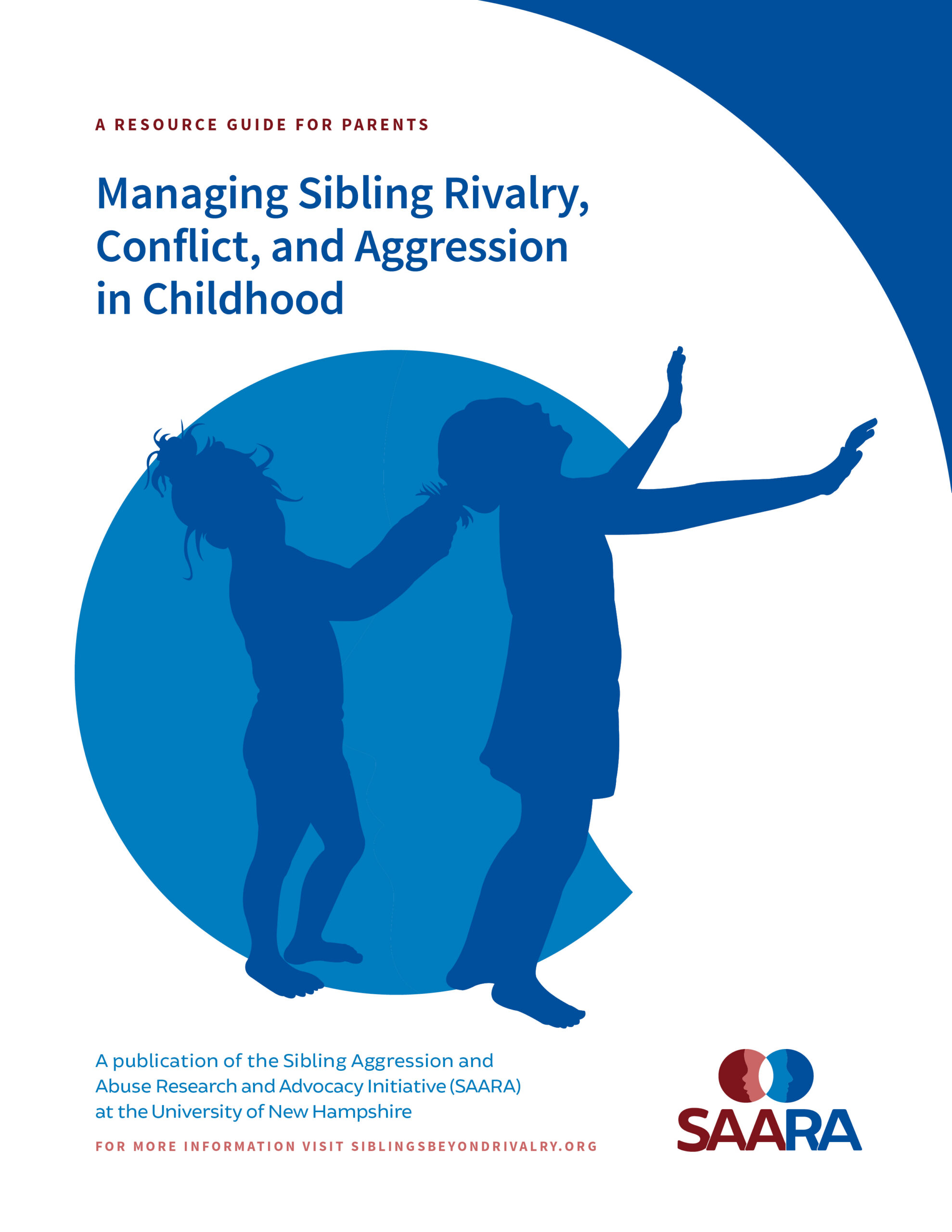
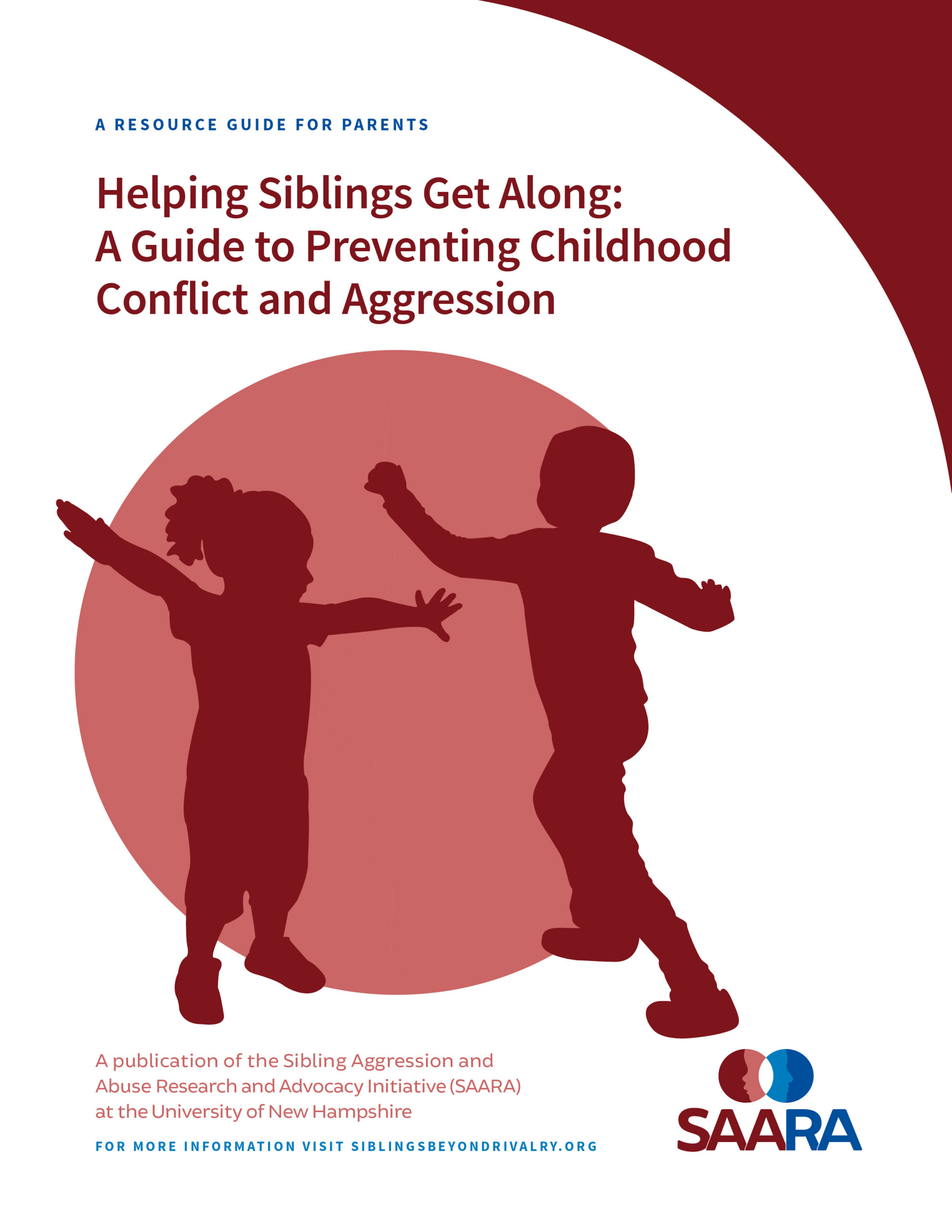
To help parents and caregivers of children aged 0-7, we designed two short, evidence-based resources on how to manage children’s rivalry and conflicts and promote life-long positive sibling relationships.
Your download is ready! Before it starts, would you like to receive occasional updates and resources by email? (Optional)
By submitting this form, you are consenting to receive marketing emails from: Sibling Aggression and Abuse Research and Advocacy Initiative, 125 McConnell Hall, 15 Academic Way, Durham, NH, 03824, http://www.unh.edu/saara. You can revoke your consent to receive emails at any time by using the SafeUnsubscribe® link, found at the bottom of every email. Emails are serviced by Constant Contact
Parents Share their Experiences
Solutions for Siblings
Find answers to common sibling conflicts and concerns. Don’t see your question? Email us at unh.saara@unh.edu.
Some fighting is normal between brothers and sisters, but when siblings fight all the time, it’s upsetting for children and for parents. Young children often need help with social and emotional skills. Parents can guide children to practice skills like asking for a turn, inviting a sibling to play, listening, and understanding another person’s feelings. To encourage a more positive sibling relationship, point out and praise moments when they get along and treat each other kindly.
The quickest solution is often for parents to step in and settle the fight. This can be effective, but it often leaves one child feeling bad and doesn’t teach children how to work out their own problems. Over time, parents can feel exasperated by constantly having to settle fights and feeling like they’re choosing sides.
Sibling relationships grow stronger when children learn to solve their own conflicts. But young children often lack the social and emotional skills to resolve fights independently. Parents can use an effective 4-step mediation process to guide their children. With practice, siblings will learn how to manage disagreements on their own. To learn more about this process, download our free guide “Managing Sibling Rivalry, Conflict, and Aggression in Childhood.”
If a sibling conflict involves aggressive behaviors like hitting, biting, or threats, parents should have the children take a short break to calm down. Once they are calm, help them talk through what happened by listening to each other’s feelings, understanding each other’s point of view, and thinking together about how to handle the situation differently next time.
Sibling rivalry is normal, but sometimes it can go too far. When sibling rivalry happens, one child may often give in to avoid conflict. Parents can help that child build confidence and learn to speak up. They can also help the other child practice empathy, understand others’ feelings, and take turns.
If parents dismiss the competitive behavior as “that’s just the way they are” or settle the competition without teaching important social and emotional skills, the behavior will continue and likely worsen. This may drive the siblings apart, at least temporarily.
Parents can also plan family activities that foster bonding and teamwork rather than competition. For example, choose cooperative board games where all players work together to beat the game rather than trying to beat each other. In daily life, notice and praise siblings when they cooperate and support one another. With time and patience, sibling rivalry should decrease.
Siblings are natural competitors and very sensitive to favoritism. They often notice and complain when they think one child is getting more attention, privileges, or possessions than another. No two children are the same; they have different personalities, sensitivities, and interests, so it’s not possible to treat them equally in every way. Ultimately, it’s more important to treat siblings fairly than equally.
To help children understand this, parents can explain why they parent siblings differently (e.g., they are different ages, or one has a disability). Being honest and direct can help children develop realistic expectations and understand how to balance the needs of multiple family members. Parents can also ask the child, “What do you need?” Sometimes the answer is as simple as spending some one-on-one time with that parent.
Fights between brothers and sisters are a normal part of growing up. But sometimes the behaviors between siblings become more serious — a child is harmed, like a bruise or scratches, or feels scared or withdraws.
Aggressive or abusive behavior should be stopped. Sibling abuse is different from sibling conflict or rivalry. It happens when one child has more power than the other and uses it in a hurtful way that can cause injury or emotional harm. If aggressive, harmful, or controlling behaviors are one-sided, with one sibling consistently harming another, it may be sibling abuse. Parents should believe the harmed child and seek help from a mental health or medical professional to ensure the safety of every family member. For more help, visit unh.edu/saara/our-work/sibling-aggression-abuse.
It is normal for young children’s sibling relationships to have highs and lows, even minute to minute. In fact, sibling relationships can be both extremely close and highly conflictual. But parents can help children build social and emotional skills so conflicts happen less often and less intensely. Sibling relationships are an ideal place to practice these skills, which will benefit them in the long run when they disagree with others, like friends.
Parents can also help by modeling healthy communication and conflict management in their relationships with others, including their children. To learn more, download our free guide “Helping Siblings Get Along: A Guide to Preventing Childhood Conflict and Aggression.”
About
Learn why Siblings Beyond Rivalry was created and what makes it different from other online parenting advice.
Many parents want help. They seek to reduce sibling rivalry and conflict, but don’t have the tools to manage them. Siblings Beyond Rivalry is a science-based resource aimed at helping parents prevent and stop sibling rivalry and conflict by teaching them and their children communication and emotional regulation skills. Above all, Siblings Beyond Rivalry’s goal is to help parents support strong, life-long sibling relationships.
Siblings Beyond Rivalry offers up-to-date, science-based resources created by leading experts on sibling dynamics who have conducted research on parenting and siblings for over two decades. For more information on who we are and the work we do, visit unh.edu/saara/about.
- Parents will be better able to identify, prevent, and respond to sibling rivalry, conflict, and aggression.
- Parents will be better equipped to coach children to develop social and emotional skills that are important for positive sibling relationships and relationships with others, including friends.
- Parents can help reduce sibling rivalry and conflict, which will likely improve children’s mental and physical health, relationships with others, and the quality of their family relationships.
Additional evidence-based resources on parenting siblings and sibling rivalry, conflict, aggression, and abuse are available on the Sibling Aggression and Abuse Research and Advocacy Initiative (SAARA) website at unh.edu/saara.
